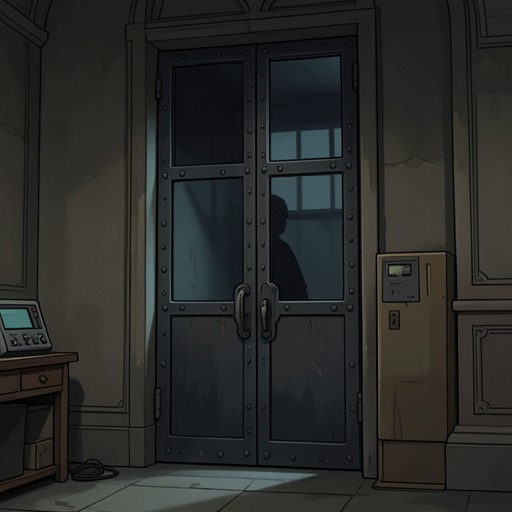
Checquy’s child-acquisition doctrine
The RookChecquy’s child-acquisition doctrine turns the discovery of supernatural ability into a claim over the person who possesses it. The organization presents recruitment as necessary to protect the public, but its methods range from inducements and family pressure to taking children without consent; once recruited, children are trained for service and are not free simply to leave. The Croatoan’s contrasting rules show that this system is a historical institutional choice, not an unavoidable condition of supernatural work.
Purpose and Authority
The doctrine rests on the Checquy’s belief that people with powers are needed to confront threats ordinary society cannot address. The organization has existed for centuries and describes its loyalty as directed toward Britain rather than whichever ruler happens to govern. Its reach is justified in national terms: powered recruits are understood as assets for public protection, while the Checquy’s secrecy keeps most of that work beyond public view.
Recruitment is backed by extensive authority. The Checquy was granted the power to claim citizens it wanted, and it uses different approaches according to whom it seeks: parents may be coerced or deceived into releasing a child, sometimes in exchange for substantial payments, while adults may be attracted by promises of power, wealth, and national service. Entry combines ancient oaths with modern contracts and official and unofficial secrecy requirements. The result is not a single act of enlistment but a web of obligations intended to bind a recruit to the organization.
Recruitment, Training, and Surveillance
The Estate is where the Checquy turns acquired children into trained members. Its stated aim is to bring pupils into the school quickly, make them feel welcome and cared for, and teach them to use their powers effectively. That promise sits alongside a highly organized regime: pupils study subjects such as classics and chemistry, train with firearms, and receive instruction in practical skills. Their education is designed around the organization’s future needs, not simply a conventional school curriculum.
Medical assessment makes the same institutional purpose visible in detail. At the beginning of Myfanwy Thomas’s training, staff photographed and interviewed her, scanned her body, recorded her voice and breath, and collected samples. They checked her health, fitted glasses, planned further treatment, and prescribed a fitness regimen. The examination also identified allergies and phobias, after which she was assigned a psychiatrist and therapy. These procedures produced a substantial record of her physical and mental condition, turning an individual recruit into a systematically documented case.
The examinations continued monthly for every pupil. The Estate tried to identify the origins of students’ abilities even when it could not explain them; staff retained readings and analyses in the hope that future workers might make sense of the data. Training likewise encouraged children to explore the limits of their powers, although instructors could not always teach abilities they did not themselves possess. Recruitment thus led into continuing observation and experimentation, a process that treated uncertainty about a child’s power as a reason for further study rather than a reason to relinquish control.
Myfanwy Thomas as a Case
Myfanwy Thomas’s recruitment illustrates both the Checquy’s confidence in its selection process and the cost of treating a child as an organizational acquisition. After her abilities manifested, Lady Linda Farrier monitored her dreams and interviewed her, while the organization scrutinized her life closely. Farrier recalled Myfanwy as healthy, happy, and apparently well suited to the Checquy. The child’s ability to control other people initially seemed an exceptional find, without weaknesses that would make her an obvious risk.
The transition to the Estate did not go as anticipated. Myfanwy withdrew and became extremely shy, and her power’s dependence on physical contact made that withdrawal especially damaging to the organization’s expectations for her. Farrier described the result as a squandered potential, but the doctrine offered no path by which a child who struggled to adapt could opt out. Staff and teachers continued working with Myfanwy for years; the institution’s investment in her did not become permission for her to leave.
That principle is stated without qualification in Farrier’s account: no one leaves the Checquy, not even children. The rule also governs the amnesiac Myfanwy, who has lost her memories but returns to work at the Rookery. Farrier explains that simply resuming her post exposes her to information outsiders must not know, making her a serious security risk; retirement or separation is considered only as a controlled arrangement, not as a right to depart. The doctrine therefore binds both the child recruited into the organization and the adult whose personal continuity has been disrupted.
The Croatoan and an Alternative
The Croatoan, the Checquy’s American counterpart, faced the same broad problem of finding people with powers but lacked the Checquy’s governmental authority to claim children. Its founder, Richard Swansea, confronted a colonial setting in which families were unlikely to surrender their children and public disclosure of supernatural abilities could expose people to danger. The organization consequently used a range of recruitment methods: some children entered through family arrangements, while others were taken from homes or streets, given new identities, educated, and trained to serve their communities. Adults were recruited or rescued as well, including people at risk of execution because of their abilities.
When the Croatoan was absorbed into the American government, George Washington denied it the authority to take powered children from their families by force. Martha Washington had supported such a power, but the president rejected it. The Croatoan retained a hierarchy and a substantial covert role, yet it had to attract recruits with appeals to duty and responsibility rather than rely on forced child acquisition. Its mandate, like the Checquy’s, was restricted to supernatural affairs. This institutional contrast shows that protection and secrecy could be organized under a different limit on recruitment.
Institutional Consequences
The doctrine is reinforced by the Checquy’s wider machinery of secrecy. Information reaches the organization through analysts, discreet briefings to government officials, and the Panic Lines, while its computer network is kept apart from external systems. These channels help the Checquy detect unnatural threats and shield its operations from public scrutiny. They also make it easier for the organization to define who counts as a risk, who must be recruited, and what information a member may carry beyond its walls.
The doctrine’s logic extends into later emergencies. When Myfanwy invokes the formal authority to deploy Harper Callahan, a ward of the Estate, the required declaration assigns the child to serve the United Kingdom’s unknowing population with all his capabilities. Only specified senior Checquy officers can authorize an agent classified as a Force of Physical Obliteration, and the decision carries extensive notification requirements. The scene makes the doctrine’s central transformation explicit: a child trained by the organization is also an instrument that its leadership can legally call into service.
The Checquy frames this system as national protection, and the threats it confronts are real within the novel. Yet the same protective rationale absorbs childhood, bodily assessment, education, secrecy, and adult service into one enduring institutional claim. The Croatoan’s prohibition on forced recruitment marks a limit the Checquy does not accept. In that contrast, the doctrine appears not merely as a staffing practice but as a political arrangement over who may decide what a gifted child is for.